
An Arab chief once told a story of a spy who was captured and then sentenced to death by a general in the Persian army. This general had the strange custom of giving condemned criminals a choice between the firing squad and the ‘big, black door.’ As the moment for execution drew near, the spy was brought to the Persian general, who asked the question, “What will it be: the firing squad or the big, black door?”The spy hesitated for a long time. It was a difficult decision. Finally, after much fearful deliberation he chose the firing squad.Moments later shots rang out confirming his execution. The general turned to his aide and said, “They always prefer the known way to the unknown. It is characteristic of people to be afraid of the undefined. Yet, we gave him a choice.”The aide said, “What lies beyond the big black door?”“Freedom,” replied the general. “But very few people have the courage to dare and risk opening that door, much less walk through it’s portal.”
Fear of the unknown; that is what we find on this glorious Easter morning. Mark’s account of the resurrection is one that makes us all some what uncomfortable and uneasy. After sixteen chapters Mark simply leaves us with the women running as fast as they can to escape the empty tomb (and of course an angelic encounter!). His Gospel narrative leaves us in desperate need of closure. The last thing we actually see are the women high-tailing it out of the garden in great fear. I don’t think they had any problem in choosing the door over the firing squad (metaphorically speaking). They ran as fast as they could back into their own comfort zones and the comfortable reality it provided them. After all, someone or something had moved that giant stone from the entrance into the tomb and Jesus’ body was nowhere to be found. The removal of the body must have been devastating enough for Jesus’ friends, not to mention all of the mystery surrounding that early morning encounter.
But what if the women had found Jesus’ body in the tomb? What if every thing had worked out nice and neat the way they expected? What if there was no shocking surprise or heavenly encounter? What if there was no risk involved and every thing went as planned? What if there were no choices to make beyond (say) what spices to anoint Jesus’ corpse; or no decisions beyond how to remove the stone from the entrance? If every thing had gone as expected for the three women on that first Easter morning; if they had found their closure by anointing the body of Jesus; and if they had tied up all of their loose ends - we wouldn’t be here today. Mark, the brilliant and inspired evangelist he was – intentionally left the Gospel ending open and loose ends untied.
Many of us like to have everything wrapped up nice and tidy in an orderly and explainable fashion. But guess what? That is not the nature of God and it is certainly isn’t characteristic of a life in Christ! God sent the women to tell the disciple’s of Jesus’ resurrection, without even giving them even the tiniest glimpse of the risen Lord! Mark leaves us wondering if they metaphorically chose the firing squad or the big black door; because the evangelist tells us they ran away in fear and said nothing (Nothing) to anyone. The greatest event in creation occurs (the Resurrection) and fear, doubt and ambiguity appear to win out; or do they?
The angel told the women that Jesus had risen and already gone to Galilee. The disciples and followers of Christ would certainly encounter him there. In the end, God’s grace will always transcend our faithlessness. In the end, God’s love will always overcome our fear. And in the end, God’s triumph of life eternal will always conquer death. Nevertheless, the choice of what kind of life we choose to lead is important to our quality of faith and spirituality.
We like to know what is coming next in life - don’t we? Most of us don’t care for surprises. We aren’t about to choose “the big black door” if we are afraid. It is amazing that we will choose self- destructive and sometimes deadly paths even though we know they are roads to nowhere; but in a sick manner, we at least can rationalize and are content with the certain knowledge of where they lead!
Often when confronted with such choices in life we find ourselves frozen in fear and indecisive. It’s a difficult and unfortunate position when we stand with one foot in yesterday and another in tomorrow. In the words of one theologian, “We crucify ourselves between two thieves: on the one side is regret for yesterday, and on the other is fear of tomorrow;” - two thieves that rob our lives of so much joy. That is one wretched place to exist my dear friends. A life of fear is one of sorrow, resentment and much regret. Yet its our choice isn’t it?
For one moment I ask us to think about those fear filled times in our lives; think back on the joy as well as opportunities that fear has caused us to miss. Touch those wounds received by life. Feel the ridges and contours of those bitter scars. In the light of the resurrection, are we willing to risk opening our hearts just a little, even though every fiber of our being rails against the hurt that could take place in that vulnerable moment? The resurrection gives us another chance at living life to its fullest potential without the overwhelming and daunting fear. Jesus rose from the grave and bought for us with his own precious blood a renewed hope and new shot at life. The risen Lord beacons to us - leave behind those consuming fears, rejoice in the power of God’s redeeming love, and don’t worry about what we don’t or can’t see (untied, loose ends). Freedom despite life’s uncertainties is what the resurrection in Mark’s Gospel is all about – freedom; freedom to embrace what lies in the unknown without worry or stress. Christ is calling us on this glorious Easter morn to walk with him down a path named – Faith. It is faith that leads to truth and it is the truth (as Jesus tells us) that will set us free.
So Mark reminds us that a life in Christ Jesus is one that thrives in the gray areas of life and embraces the unknown. True spiritual growth only occurs in the ambiguity of risk and the acceptance of change. Spiritual maturity occurs when we faithfully step through the big black door, even though we know not what awaits us behind its mystery. But by stepping through the door of faith and embracing the risen Christ we can let go of our regrets of yesterday, as well as those phantom fears of tomorrow. We can then live my sisters and brothers- truly live! We can live a full life (with all of its challenges) with faith, joy and hope in the present!
Today Christ has risen!!! Today we have a renewed hope, a new covenant with God and an assurance of freedom from the bondage of sin and death. Today, we are bathed in the glowing light of the resurrection and brought through that mysterious door that leads to eternal life
Saturday, April 11, 2009

Jesus is Laid in the Sepulchre
Laid in a borrowed tomb, awaiting the sign of Jonah
-the only sign that would be given to His generation
-that after three days and nights in the womb of the earth,
the belly of the fish, the grave and hell,
He would come forth to do His Father's will
-Jesus the humble Son of God , the exultant Son of Man,
the eternal contradiction, the Blessed One.
The end is not yet. Weeping endures for a night,
but joy comes in the morning.
The good news - 'He is risen' -
will burst upon the Son-rise.
Therefore with joy we shall draw water
out of the wells of salvation.
When all is dark,
and Hope is buried,
it is hard to trust His words
that promised, before the pain:
He died that I might live.
In His death is my birth.
He dies that I might live.
In His life is my life.
He died that I might live.
My Jesus! He died that I might live.
He died that I might live.
~ 'The Way of the Cross,' Celtic Daily Prayer.
-the only sign that would be given to His generation
-that after three days and nights in the womb of the earth,
the belly of the fish, the grave and hell,
He would come forth to do His Father's will
-Jesus the humble Son of God , the exultant Son of Man,
the eternal contradiction, the Blessed One.
The end is not yet. Weeping endures for a night,
but joy comes in the morning.
The good news - 'He is risen' -
will burst upon the Son-rise.
Therefore with joy we shall draw water
out of the wells of salvation.
When all is dark,
and Hope is buried,
it is hard to trust His words
that promised, before the pain:
He died that I might live.
In His death is my birth.
He dies that I might live.
In His life is my life.
He died that I might live.
My Jesus! He died that I might live.
He died that I might live.
~ 'The Way of the Cross,' Celtic Daily Prayer.
Tuesday, April 7, 2009
I dared to Look in the Mirror and What did I See?
During this most Holy Week in Christendom, like many faithful believers, I have decided to do all I can to walk with a more intentional purpose with our Lord Jesus Christ through his passion. I hope to journey through this week and emerge with a stronger vision and embodiment of Christ. I want to look deep below the surface of the passion narrative to see just how and (probably more importantly) why God relates to us.
I ask myself: When we look into the face of the tortured, flogged and mocked Jesus, what do we see? When we hear the hostile crowds yell to Pilate, "Crucify Him!" do we hear our voice mingled amongst the mob?
I truly enjoy the little book, "Love Set Free" by Brother Martin L. Smith, SSJE. In the Gospel of John during Jesus' trial we hear Pilate say, "Here is the man!" Brother Smith stresses that this one tiny sentence is a profound revelation to our inner selves. The humanity of Jesus is important and vital to our salvation and hope. The longer and more deeply we gaze at Jesus the better we are able to internalize and witness "the dignity of his [Jesus'] stillness and suffering compassion and companionship of God." By entering into the darkness of Christ's passion and suffering, we realize the profound truth; "God is not a distant God looking down at this scene[Jesus' trial and execution] or a remote God peering over the horizon." By looking into the suffering eyes of Christ Jesus we get a tiny glimpse of the incredible nature of God. For it is "only by drawing near enough to us to be caught up in the cycle of human self-destructive violence does God get near enough to end the cycle with healing, reconciliation and reunion."
God strives to get as close to us as we will allow him. This is how our lives are transformed and the cycle of self-destructive behavior is broken. God is an engaging God who genuinely wants to be in communion with us. Through Christ Jesus we are drawn nearer to God; we are made one with him - just as he and the Father are one. There is a genuine dignity in this precious moment; for it is here, in this intimate moment that our inner most pain and suffering are not only revealed, but absorbed in Christ's suffering and pain. Gods meets us where we are in life and thus opens our hearts to shine through the darkness, and live as wholesome examples in Christ.
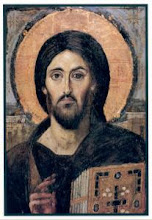
In conclusion, when we look into the tortured, blood stained and bruised face of Jesus what do we see? I see a compassionate God who loves and honors the dignity in all people, even when those same people lash out and turn away from him. I see a loving God whose passion for humanity far exceeds our often selfish and rebellious behavior. I see a God who allows us to throw him under the bus, only to reach out in reconciling forgiveness and invite us to sit beside him on the bus.
Will we accept God's invitation to walk through this most holy week with Jesus? Will we dare to look into the face of Christ and risk seeing a reflection of our broken selves? Do we dare acknowledge those places where we harbor our most intense pain and shame? Will we open our hearts to the compassion of Christ and let him heal those festering sores; sores that are infected with resentment, hate and self-centeredness?
This Holy Week dare to look into the mirror eyes of Christ. Embrace the truth that stares back at us; for it is not only a reflection of our own hurt, sorrow and pain, but a reflection of Christ's redeeming love as well.
I ask myself: When we look into the face of the tortured, flogged and mocked Jesus, what do we see? When we hear the hostile crowds yell to Pilate, "Crucify Him!" do we hear our voice mingled amongst the mob?
I truly enjoy the little book, "Love Set Free" by Brother Martin L. Smith, SSJE. In the Gospel of John during Jesus' trial we hear Pilate say, "Here is the man!" Brother Smith stresses that this one tiny sentence is a profound revelation to our inner selves. The humanity of Jesus is important and vital to our salvation and hope. The longer and more deeply we gaze at Jesus the better we are able to internalize and witness "the dignity of his [Jesus'] stillness and suffering compassion and companionship of God." By entering into the darkness of Christ's passion and suffering, we realize the profound truth; "God is not a distant God looking down at this scene[Jesus' trial and execution] or a remote God peering over the horizon." By looking into the suffering eyes of Christ Jesus we get a tiny glimpse of the incredible nature of God. For it is "only by drawing near enough to us to be caught up in the cycle of human self-destructive violence does God get near enough to end the cycle with healing, reconciliation and reunion."
God strives to get as close to us as we will allow him. This is how our lives are transformed and the cycle of self-destructive behavior is broken. God is an engaging God who genuinely wants to be in communion with us. Through Christ Jesus we are drawn nearer to God; we are made one with him - just as he and the Father are one. There is a genuine dignity in this precious moment; for it is here, in this intimate moment that our inner most pain and suffering are not only revealed, but absorbed in Christ's suffering and pain. Gods meets us where we are in life and thus opens our hearts to shine through the darkness, and live as wholesome examples in Christ.
In conclusion, when we look into the tortured, blood stained and bruised face of Jesus what do we see? I see a compassionate God who loves and honors the dignity in all people, even when those same people lash out and turn away from him. I see a loving God whose passion for humanity far exceeds our often selfish and rebellious behavior. I see a God who allows us to throw him under the bus, only to reach out in reconciling forgiveness and invite us to sit beside him on the bus.
Will we accept God's invitation to walk through this most holy week with Jesus? Will we dare to look into the face of Christ and risk seeing a reflection of our broken selves? Do we dare acknowledge those places where we harbor our most intense pain and shame? Will we open our hearts to the compassion of Christ and let him heal those festering sores; sores that are infected with resentment, hate and self-centeredness?
This Holy Week dare to look into the mirror eyes of Christ. Embrace the truth that stares back at us; for it is not only a reflection of our own hurt, sorrow and pain, but a reflection of Christ's redeeming love as well.
Saturday, April 4, 2009
Palm Monday Hangover?
Palm Monday. The donkey awakened, his mind still savoring the afterglow of the most exciting day of his life. Never before had he felt such a rush of pleasure and pride. He walked into town and found a group of people by the well. “I’ll show myself to them,” he thought.
But they didn’t notice him. They went on drawing their water and paid him no mind. “Throw your garments down,” he said crossly. “Don’t you know who I am?” They just looked at him as nothing more than a wandering mule. Then to add insult to injury, someone slapped him across the tail and ordered him to move. “Miserable heathens!” the donkey muttered to himself. “I’ll just go to the market. The good people there will remember me for sure!” But when the little donkey arrived in the busy Jerusalem market the same thing happened - no one (not a single person) paid him any attention. Then the donkey thought, “Oh yes, the palm branches! Where are the palm branches?! Yesterday, these people raised, waved and threw palm branches!” Hurt, baffled and confused, the donkey sulked and returned home to his mother. When she heard what had happened, she compassionately whispered to the little donkey, “Foolish child, don’t you realize that without Jesus, you are just an ordinary donkey?”
Today we are reminded that without Jesus to accompany us in this life, we are like the donkey in this (made up) metaphor; we too are simply misguided creatures, full of false hope and lofty expectations. We end up living superficial lives that seek nothing more than to live in moments of self-centered glory.
The people who crowded into the streets of Jerusalem in order to welcome Jesus into the city had worked themselves up into a frenzy; a frenzy driven by false hope and unrealistic, lofty expectations. Jesus was the Messiah. This was a triumphant military entry into the most holy city in the universe. The Christ would liberate these people from the burden of Roman oppression; the Christ would raise Israel up above her enemies in triumph; the Christ would bring down the reign of God, and Zion would flourish. Yet, as we shall see the Jewish leaders and people of Jerusalem set themselves up for a major disappointment.
Like our little donkey, Holy Monday (Palm Monday as the story called it) brought a completely different tone. Where were the mighty acts of this Messiah? Where were the angel and heavenly hosts? Where was their “self” prophesied liberation? Why were the Roman soldiers still occupying the city? Nothing had changed! Disappointment, discouragement and ultimately anger must have festered in the city streets of Jerusalem. I imagine each time a discarded palm branch came into view; it only served to stoke and ignite the angry disappointment of the Jewish people. To make matters worse, not only did Jesus not call down a heavenly army of liberators, Mark tells us that as quickly as he entered the city, he left. Jesus didn’t even make a sacrifice in the temple, address the people or challenge the Roman authorities. Jesus and his disciples go back outside the city to Bethany and retire for the night. Is Mark joking? All the hype and energetic build up and then – nothing? Ironically the very moment the crowds seem at last to recognize Jesus and eager to affirm his identity, Jesus decides to emphasize that he is not the kind of Davidic and liberating Messiah they expect. So Jesus and the twelve disciples simply left Jerusalem leaving nothing more than a (disillusioned) donkey to show he had been present.
Palm Sunday is a subtle reminder to each of us that it is often our own expectations (spoken or not) that get us into trouble and cut us off from God. Our perceptions of what we want God to do in this life often become the stumbling blocks that trip us up as we journey through this life. If only God would have saved that person from death; if only God had not allowed that criminal to commit such a heinous act; if only God had allowed me to avoid those painful experiences….(the list goes on and on).
We have all stood in the street and waived our palms at Jesus, expecting him to do for us those things that we desire or project on him. And we have all felt the bitter disappointment when those expectations go unmet. Yet God is not manipulated by our actions, nor tricked by our careful plans. Instead, God loves us despite the isolating and divisive nature of sin. God longs to be in communion with each and every one of us, and looks beyond our human shortsightedness to the eternal truth. And just what is that eternal truth? It is the fact that God’s nature is to draw all things to him. While sin ran amok in this world, unchecked and ramped, God’s task was not possible. But in Christ Jesus, that would change!
Like the label on the back of a bottle of salad dressing that says, Shake well before using - shaking is a part of God’s divine nature. God doesn't forewarn, he doesn't explain, sometimes he just shakes.God shook Job -- he lost everything.God shook Jonah -- the bottom dropped out of his plans.God shook the apostles -- the vibrations didn't stop until they reached heaven.Left unshaken, a bottle of salad dressing creates sour sediment like that at the bottom of a wine vat. The world had become stale, flat and sour because she was sedimentary, calcified, hardened. Through out the history of the world we witness God restore his people and nations by shaking them up. God doesn't shake just for the sake of shaking. There is a reason. The stuff of life is being rearranged, and people are going to be affected.
Therefore on the day we call Palm Sunday, God decided to radically shake things up in this world. God did the most unexpected and selfless act by sending Jesus as the living sacrifice that would restore the world to freedom. Through this jarring action - sin and death are defeated and the hope for all creation is restored. The eternal truth is - that our hope (yours and mine) is restored, and nothing (Absolutely Nothing) will separate us from the love of God in Christ Jesus.
As we move forward into Holy Week and journey with Jesus to the cross, I ask each of us to prayerfully reflect:
What selfish expectations do we wave like palms in the air as we seek Christ?
What parts of our lives need to be shaken and jarred?
Are we like the donkey on “Palm Monday” blindly caught up in our own life needs and wants?
The journey that lies before us as we enter Holy Week is one that will take us ever deeper into the mystery of God. This is a journey that will shake our lives to their very core, shaking loose the sediments and calcified deposits of sin that weigh us down; the hardened film that cuts us off from God. Holy Week has begun; darkness falls; the light is dimmed; Christ has triumphantly entered Jerusalem (only) to quietly leave and prepare for the earth shattering darkness to come.
But they didn’t notice him. They went on drawing their water and paid him no mind. “Throw your garments down,” he said crossly. “Don’t you know who I am?” They just looked at him as nothing more than a wandering mule. Then to add insult to injury, someone slapped him across the tail and ordered him to move. “Miserable heathens!” the donkey muttered to himself. “I’ll just go to the market. The good people there will remember me for sure!” But when the little donkey arrived in the busy Jerusalem market the same thing happened - no one (not a single person) paid him any attention. Then the donkey thought, “Oh yes, the palm branches! Where are the palm branches?! Yesterday, these people raised, waved and threw palm branches!” Hurt, baffled and confused, the donkey sulked and returned home to his mother. When she heard what had happened, she compassionately whispered to the little donkey, “Foolish child, don’t you realize that without Jesus, you are just an ordinary donkey?”
Today we are reminded that without Jesus to accompany us in this life, we are like the donkey in this (made up) metaphor; we too are simply misguided creatures, full of false hope and lofty expectations. We end up living superficial lives that seek nothing more than to live in moments of self-centered glory.
The people who crowded into the streets of Jerusalem in order to welcome Jesus into the city had worked themselves up into a frenzy; a frenzy driven by false hope and unrealistic, lofty expectations. Jesus was the Messiah. This was a triumphant military entry into the most holy city in the universe. The Christ would liberate these people from the burden of Roman oppression; the Christ would raise Israel up above her enemies in triumph; the Christ would bring down the reign of God, and Zion would flourish. Yet, as we shall see the Jewish leaders and people of Jerusalem set themselves up for a major disappointment.
Like our little donkey, Holy Monday (Palm Monday as the story called it) brought a completely different tone. Where were the mighty acts of this Messiah? Where were the angel and heavenly hosts? Where was their “self” prophesied liberation? Why were the Roman soldiers still occupying the city? Nothing had changed! Disappointment, discouragement and ultimately anger must have festered in the city streets of Jerusalem. I imagine each time a discarded palm branch came into view; it only served to stoke and ignite the angry disappointment of the Jewish people. To make matters worse, not only did Jesus not call down a heavenly army of liberators, Mark tells us that as quickly as he entered the city, he left. Jesus didn’t even make a sacrifice in the temple, address the people or challenge the Roman authorities. Jesus and his disciples go back outside the city to Bethany and retire for the night. Is Mark joking? All the hype and energetic build up and then – nothing? Ironically the very moment the crowds seem at last to recognize Jesus and eager to affirm his identity, Jesus decides to emphasize that he is not the kind of Davidic and liberating Messiah they expect. So Jesus and the twelve disciples simply left Jerusalem leaving nothing more than a (disillusioned) donkey to show he had been present.
Palm Sunday is a subtle reminder to each of us that it is often our own expectations (spoken or not) that get us into trouble and cut us off from God. Our perceptions of what we want God to do in this life often become the stumbling blocks that trip us up as we journey through this life. If only God would have saved that person from death; if only God had not allowed that criminal to commit such a heinous act; if only God had allowed me to avoid those painful experiences….(the list goes on and on).
We have all stood in the street and waived our palms at Jesus, expecting him to do for us those things that we desire or project on him. And we have all felt the bitter disappointment when those expectations go unmet. Yet God is not manipulated by our actions, nor tricked by our careful plans. Instead, God loves us despite the isolating and divisive nature of sin. God longs to be in communion with each and every one of us, and looks beyond our human shortsightedness to the eternal truth. And just what is that eternal truth? It is the fact that God’s nature is to draw all things to him. While sin ran amok in this world, unchecked and ramped, God’s task was not possible. But in Christ Jesus, that would change!
Like the label on the back of a bottle of salad dressing that says, Shake well before using - shaking is a part of God’s divine nature. God doesn't forewarn, he doesn't explain, sometimes he just shakes.God shook Job -- he lost everything.God shook Jonah -- the bottom dropped out of his plans.God shook the apostles -- the vibrations didn't stop until they reached heaven.Left unshaken, a bottle of salad dressing creates sour sediment like that at the bottom of a wine vat. The world had become stale, flat and sour because she was sedimentary, calcified, hardened. Through out the history of the world we witness God restore his people and nations by shaking them up. God doesn't shake just for the sake of shaking. There is a reason. The stuff of life is being rearranged, and people are going to be affected.
Therefore on the day we call Palm Sunday, God decided to radically shake things up in this world. God did the most unexpected and selfless act by sending Jesus as the living sacrifice that would restore the world to freedom. Through this jarring action - sin and death are defeated and the hope for all creation is restored. The eternal truth is - that our hope (yours and mine) is restored, and nothing (Absolutely Nothing) will separate us from the love of God in Christ Jesus.
As we move forward into Holy Week and journey with Jesus to the cross, I ask each of us to prayerfully reflect:
What selfish expectations do we wave like palms in the air as we seek Christ?
What parts of our lives need to be shaken and jarred?
Are we like the donkey on “Palm Monday” blindly caught up in our own life needs and wants?
The journey that lies before us as we enter Holy Week is one that will take us ever deeper into the mystery of God. This is a journey that will shake our lives to their very core, shaking loose the sediments and calcified deposits of sin that weigh us down; the hardened film that cuts us off from God. Holy Week has begun; darkness falls; the light is dimmed; Christ has triumphantly entered Jerusalem (only) to quietly leave and prepare for the earth shattering darkness to come.
Thursday, April 2, 2009
Go to Dark Gethsemane
Let go in faith and journey into the unknown. Easily said, much harder to do! The author of the Book of Hebrews tells us, “Faith is the substance of things hoped for and the assurance of things unseen.” In other words, faith is a means of letting go of all the “control issues” in our lives; those predetermined plans that we often interject or sneak into our prayers as we try to influence God to “just let things turn out my way!”
Throughout Scripture we witness God’s people do great things because of their willingness to step outside of themselves in faith. Abraham left behind all he knew and led his people into a new land, becoming the Father of all Nations. Moses answered God’s call and returned to Egypt to face Pharaoh, in order to free the Children of Israel from the bondage of sin and slavery. God’s prophets were driven (sometimes kicking and screaming) by faith to hold God’s people accountable when they strayed away from Yhweh. Countless Christians in the early church (as well as today) experienced intense persecution by governments and authorities because of their faithfulness to Christ. And finally, Jesus faithfully accepted his fate in the Garden of Gethsemane even though he prayed to the Father, “If it be your will please remove this cup from my lips, but thou will be done.”
As we prepare to embark on this journey with Christ and disciples through Holy Week, we find ourselves on a path that is most uncomfortable and often harsh. Like the disciples, it is easier to fall asleep, run and avoid the painful darkness of Holy Week. This is the time for Jesus’ passion and suffering; a faithful suffering that buys our freedom from the bondage of sin and death. All too often we go to sleep on Palm Sunday and awake on Easter morning. We miss the whole journey! In many ways we are no better than the faithless disciples who abandoned Christ in his most desperate hour. Faith is not comfortable. Faith is not easy. Faith is not an assurance that we will always get our way in life (thank goodness!). Faith requires us to stand, walk and trudge forward, even though life sometimes hurts and becomes very dark and grim. Faith is the grains of sand used to polish our armor of light (as Paul describes in his Letter to the Ephesians) so that our spirits burn brighter and more radiant despite the darkness of our age. Faith simply requires that we believe; believe in Christ Jesus’ unconditional love and the wholesome desire to do the next right thing no matter the cost.
During this most holy week of Christendom, as we prepare to undertake this difficult journey of faith with Jesus, one that will lead us right through the painful abandonment of the cross; it is my most fervent prayer that we find the courage to believe in God’s redeeming grace and love. Dear Father I believe! Help my unbelief!
Throughout Scripture we witness God’s people do great things because of their willingness to step outside of themselves in faith. Abraham left behind all he knew and led his people into a new land, becoming the Father of all Nations. Moses answered God’s call and returned to Egypt to face Pharaoh, in order to free the Children of Israel from the bondage of sin and slavery. God’s prophets were driven (sometimes kicking and screaming) by faith to hold God’s people accountable when they strayed away from Yhweh. Countless Christians in the early church (as well as today) experienced intense persecution by governments and authorities because of their faithfulness to Christ. And finally, Jesus faithfully accepted his fate in the Garden of Gethsemane even though he prayed to the Father, “If it be your will please remove this cup from my lips, but thou will be done.”
As we prepare to embark on this journey with Christ and disciples through Holy Week, we find ourselves on a path that is most uncomfortable and often harsh. Like the disciples, it is easier to fall asleep, run and avoid the painful darkness of Holy Week. This is the time for Jesus’ passion and suffering; a faithful suffering that buys our freedom from the bondage of sin and death. All too often we go to sleep on Palm Sunday and awake on Easter morning. We miss the whole journey! In many ways we are no better than the faithless disciples who abandoned Christ in his most desperate hour. Faith is not comfortable. Faith is not easy. Faith is not an assurance that we will always get our way in life (thank goodness!). Faith requires us to stand, walk and trudge forward, even though life sometimes hurts and becomes very dark and grim. Faith is the grains of sand used to polish our armor of light (as Paul describes in his Letter to the Ephesians) so that our spirits burn brighter and more radiant despite the darkness of our age. Faith simply requires that we believe; believe in Christ Jesus’ unconditional love and the wholesome desire to do the next right thing no matter the cost.
During this most holy week of Christendom, as we prepare to undertake this difficult journey of faith with Jesus, one that will lead us right through the painful abandonment of the cross; it is my most fervent prayer that we find the courage to believe in God’s redeeming grace and love. Dear Father I believe! Help my unbelief!
Thursday, March 19, 2009
A Journey through Christendom's Most Holy time of Year
The Liturgical Season of Lent:
Lent is the season of prayerful journey and self-reflection. It is the forty days plus the six Sundays of preparation and self-denial that lead up to Easter. For centuries, Lent has been observed as a special time of personal examination and penitence. Today we find ourselves in a barren season that beacons us to concentrate on our fundamental Christian values and priorities. Contrary to the views of many, the season of Lent is not a time for self punishment; instead it is a time of letting go of those things that cut us off from God. Lent is a time in our spiritual lives in which we are called by God to prepare our hearts for the redeeming love of Christ.
Perhaps we find ourselves living in this world as one of the many aimlessly lapsed Christians, wandering away from church and neglecting our spiritual lives. For centuries, Lent has offered God's people the opportunity to return to the fellowship of the church. In fact the season of Lent historically is a period in the life of the church in which the lapsed, as well as those who have committed notorious sins were received back into the community of faith. If you are questioning your own faith and wondering what to believe, this is a most appropriate reflect and ask the difficult questions with sincerity and truth. For some Lent is a pathway that leads back into the Body of Christ or the Church.
Throughout Lent, the worship services of the church take on a simpler tone, appropriate to this season. Crosses showing the risen Christ are veiled. The word "Alleluia" is not used in the words of the liturgy or hymns. These practices help the worshipping community to mark this season of renewal as a special time in the church year.
Observing a Holy Lent ~ The custom is to mark the season of Lent by giving up some things and taking on others. Both can serve to mark the season as a holy time of preparation. Some examples of things people give up for Lent include sweets, meat for all or some meals, and alcohol. In most cases, giving up something for Lent can be made more meaningful by using the money or time for another purpose. For example, meal times on fast days could be spent in prayer. Another example is that if you give up meat during Lent, the extra money that would go to meat dishes can be given to a group, such as World Vision, which works to end hunger worldwide. Some things added during Lent are daily Bible reading, fasting on Fridays, times of prayer, taking a course of study related in some way to spirituality.
Note that the season of Lent is forty days plus the six Sundays. This is because Sundays are celebrations of Jesus’ resurrection and are always an appropriate day to lessen the restrictions of Lent. So that if you have, for example, given up chocolate for Lent, you could indulge in a weekly candy bar on Sunday.
The Sacrament of Confession ~ Lent is also an especially appropriate time for the sacrament of confession. While confession to a priest is not required to receive God’s forgiveness, it can be a meaningful rite of reconciliation to God.
Special Days and Services:
Shrove Tuesday ~ This is actually the day before Lent begins. The day is named for the "shriving" or confessing that was traditional on this day before beginning Lent. This day is also known as Maddi Gras, or "Fat Tuesday," because it was a time for eating the things from which one would abstain during Lent. Pancake suppers are traditional as they were a way of using up some of the ingredients not needed during Lent.
Ash Wednesday ~ The first day of Lent is marked with a special liturgy. The theme for the day, though not for all of Lent, is that we stand as sinners condemned to die, but for God’s grace. This is symbolized by the imposition of ashes on the forehead, with the words, "You are dust and to dust you shall return." In the Old Testament, ashes were a sign of penitence (feeling regretful at offenses) and mourning.
Ash Wednesday is one of two days of special observance (the other being Good Friday) for which fasting is recommended. While this usually refers going without food for the entire day, this practice is not practical for all persons, including, but not limited to, diabetics. Use your own discretion in determining how you can best observe this day.
Stations of the Cross ~ These are depictions of 14 incidents in the Gospel accounts of Jesus’ death from Pilate’s house to being placed in the tomb. They are used for the service called the Way of the Cross, which visits each station in turn with a brief reading, response, collect and on some occasions, a meditation. This is particularly appropriate for Good Friday.
Palm Sunday ~ This Sunday before Easter is the last Sunday in Lent. The day commemorates Jesus’ triumphal entry into Jerusalem with a blessing of palms and a procession in which the whole congregation carries palms. The day is also marked by reading the story of Jesus’ passion (the word used to describe Jesus’ death comes from "suffering," which is one old meaning of passion).
Maundy Thursday ~ This is the Thursday in Holy Week (the week leading up to Easter). The day is a time for remembering The Last Supper. The name comes from the Latin word "Maundatum" for "commandment" as Jesus said, "I give you a new commandment; that you love one another." This is also the moment in which Jesus showed his disciples the meaning of servant hood by washing their feet. We will observe the foot washing during the liturgy. At the conclusion of this service, altars are stripped of any ornamentation and crosses are removed or veiled to mark the solemnness of the occasion.
Good Friday ~ The Friday in Holy Week is a time for remembering Jesus death. Traditionally there is a Good Friday service at noon as Jesus hung on the cross from noon until 3 p.m. This is the second day of special observance for which fasting is recommended. One should use discretion in decided how best to observe this day. There is no celebration of Communion from Maundy Thursday until the Easter Vigil on late Saturday or early Sunday. However, it is customary in many churches to give out the elements of communion blessed during the Maundy Thursday service.
The Easter Vigil ~ This service is appropriate from after sunset on Holy Saturday until sunrise Easter morning. This is our most ancient Christian Liturgy. In the early Christian Church it was the traditional time of baptism, reaffirmation and reconciliation. This service begins in darkness and a new fire is lit, from which the Christ candle is lighted. It signifies the light of Christ coming into the world anew at the resurrection. This service ends the season of Lent and begins the joy of the Easter season.
Lent is the season of prayerful journey and self-reflection. It is the forty days plus the six Sundays of preparation and self-denial that lead up to Easter. For centuries, Lent has been observed as a special time of personal examination and penitence. Today we find ourselves in a barren season that beacons us to concentrate on our fundamental Christian values and priorities. Contrary to the views of many, the season of Lent is not a time for self punishment; instead it is a time of letting go of those things that cut us off from God. Lent is a time in our spiritual lives in which we are called by God to prepare our hearts for the redeeming love of Christ.
Perhaps we find ourselves living in this world as one of the many aimlessly lapsed Christians, wandering away from church and neglecting our spiritual lives. For centuries, Lent has offered God's people the opportunity to return to the fellowship of the church. In fact the season of Lent historically is a period in the life of the church in which the lapsed, as well as those who have committed notorious sins were received back into the community of faith. If you are questioning your own faith and wondering what to believe, this is a most appropriate reflect and ask the difficult questions with sincerity and truth. For some Lent is a pathway that leads back into the Body of Christ or the Church.
Throughout Lent, the worship services of the church take on a simpler tone, appropriate to this season. Crosses showing the risen Christ are veiled. The word "Alleluia" is not used in the words of the liturgy or hymns. These practices help the worshipping community to mark this season of renewal as a special time in the church year.
Observing a Holy Lent ~ The custom is to mark the season of Lent by giving up some things and taking on others. Both can serve to mark the season as a holy time of preparation. Some examples of things people give up for Lent include sweets, meat for all or some meals, and alcohol. In most cases, giving up something for Lent can be made more meaningful by using the money or time for another purpose. For example, meal times on fast days could be spent in prayer. Another example is that if you give up meat during Lent, the extra money that would go to meat dishes can be given to a group, such as World Vision, which works to end hunger worldwide. Some things added during Lent are daily Bible reading, fasting on Fridays, times of prayer, taking a course of study related in some way to spirituality.
Note that the season of Lent is forty days plus the six Sundays. This is because Sundays are celebrations of Jesus’ resurrection and are always an appropriate day to lessen the restrictions of Lent. So that if you have, for example, given up chocolate for Lent, you could indulge in a weekly candy bar on Sunday.
The Sacrament of Confession ~ Lent is also an especially appropriate time for the sacrament of confession. While confession to a priest is not required to receive God’s forgiveness, it can be a meaningful rite of reconciliation to God.
Special Days and Services:
Shrove Tuesday ~ This is actually the day before Lent begins. The day is named for the "shriving" or confessing that was traditional on this day before beginning Lent. This day is also known as Maddi Gras, or "Fat Tuesday," because it was a time for eating the things from which one would abstain during Lent. Pancake suppers are traditional as they were a way of using up some of the ingredients not needed during Lent.
Ash Wednesday ~ The first day of Lent is marked with a special liturgy. The theme for the day, though not for all of Lent, is that we stand as sinners condemned to die, but for God’s grace. This is symbolized by the imposition of ashes on the forehead, with the words, "You are dust and to dust you shall return." In the Old Testament, ashes were a sign of penitence (feeling regretful at offenses) and mourning.
Ash Wednesday is one of two days of special observance (the other being Good Friday) for which fasting is recommended. While this usually refers going without food for the entire day, this practice is not practical for all persons, including, but not limited to, diabetics. Use your own discretion in determining how you can best observe this day.
Stations of the Cross ~ These are depictions of 14 incidents in the Gospel accounts of Jesus’ death from Pilate’s house to being placed in the tomb. They are used for the service called the Way of the Cross, which visits each station in turn with a brief reading, response, collect and on some occasions, a meditation. This is particularly appropriate for Good Friday.
Palm Sunday ~ This Sunday before Easter is the last Sunday in Lent. The day commemorates Jesus’ triumphal entry into Jerusalem with a blessing of palms and a procession in which the whole congregation carries palms. The day is also marked by reading the story of Jesus’ passion (the word used to describe Jesus’ death comes from "suffering," which is one old meaning of passion).
Maundy Thursday ~ This is the Thursday in Holy Week (the week leading up to Easter). The day is a time for remembering The Last Supper. The name comes from the Latin word "Maundatum" for "commandment" as Jesus said, "I give you a new commandment; that you love one another." This is also the moment in which Jesus showed his disciples the meaning of servant hood by washing their feet. We will observe the foot washing during the liturgy. At the conclusion of this service, altars are stripped of any ornamentation and crosses are removed or veiled to mark the solemnness of the occasion.
Good Friday ~ The Friday in Holy Week is a time for remembering Jesus death. Traditionally there is a Good Friday service at noon as Jesus hung on the cross from noon until 3 p.m. This is the second day of special observance for which fasting is recommended. One should use discretion in decided how best to observe this day. There is no celebration of Communion from Maundy Thursday until the Easter Vigil on late Saturday or early Sunday. However, it is customary in many churches to give out the elements of communion blessed during the Maundy Thursday service.
The Easter Vigil ~ This service is appropriate from after sunset on Holy Saturday until sunrise Easter morning. This is our most ancient Christian Liturgy. In the early Christian Church it was the traditional time of baptism, reaffirmation and reconciliation. This service begins in darkness and a new fire is lit, from which the Christ candle is lighted. It signifies the light of Christ coming into the world anew at the resurrection. This service ends the season of Lent and begins the joy of the Easter season.
Sunday, March 8, 2009
I'm with Peter!
In the 16th c. the Pope sent Jesuit missionary’s into China in order to evangelize the huge population. He had them take art work with them that depicted scenes from Jesus’ life. He thought this would assist with the obvious challenge of the language barrier. Interestingly the Chinese people took an instant liking to paintings of the Blessed Virgin Mary holding the Christ Child. However, when it came to depictions of the crucifixion and the missionary’s explanation that this was the same child that Mary was holding, they were shocked. The Chinese people were even more disturbed that this Child was the Christian God and that was treated so repulsively. They were horrified to see how Jesus was made to suffer and ultimately die. This was extremely counter cultural to them, so the Chinese people decided they would rather worship the Blessed Mother Mary, since she was pictured in love and adoration for the child.
None of us likes suffering do we? It is counter cultural to our need to survive and live. When Jesus tells the disciples that he must be delivered into the hands of his enemies, suffer and die by crucifixion, they naturally were appalled. Peter, who had just identified Jesus as the Messiah (after all Peter is the guy in the bunch who most often spoke first and thought later) – he was the stunned enough to actually rebuke Jesus. Think about it for one moment and put yourself in Peter’s shoes (or sandals). He and the rest of the disciples had witnessed Jesus heal the sick, cast out demons and work miracles. Jesus was their hope; Jesus was their leader; Jesus was their inspiration. Yet, Jesus must die.
Well, I don’t know about you all but I’m with Peter! I would have had the same reaction. I would have been just as confused, protective and ready to argue with Jesus as Peter. I would have been ready to keep my dear friend safe and secure. Friends protect friends; that is the way love and friendship work! There would be no reason for useless suffering. Look at all the good Jesus was doing for his people. Like the Chinese, I would have been repulsed had Jesus revealed his hideous fate on the cross; one that was reserved for thieves, murderers and rebels.
Jesus reaction to Peter was even harsher than Peter’s reaction to him. The Greek word Mark used for ~ rebuke ~ is the exact same word he uses when Jesus casts out demons. This was a very serious rebuke! It was a direct command with the authority of God. Jesus would not be tempted. He knew this was one of those moments that the Adversary seized to try and derail his divine mission; even though the temptation came in the form of concern from an innocent and loving friend.
Jesus mission was one of love and sacrifice. In the process he redefined discipleship. Jesus says, “Set your mind on divine things, not human things.” And here is the real kicker, he says, “Be ready to suffer!” Suffer! That’s right, you heard me correctly. To be a follower of Jesus means that we must become willing to suffer. What Mark is telling us is that self-sacrifice, self-abandonment and self-empting are at the very core of God’s divine love for all creation. Jesus is telling us that in order to follow him, we are called to suffer through the same self-sacrificial acts. This is what he means when he says, “In order to save you life you must lose it.”
One January afternoon in 2007, 50-year-old Wesley Autrey was waiting with his two young daughters to board a train at Broadway’s 137th Street station in Manhattan, when the unthinkable happened. According to cbsnews.com, Cameron Hollopeter, 19, fell onto the subway tracks while suffering a seizure, just as an oncoming train was approaching. In a split second Autrey, a construction worker and Vietnam War veteran jumped onto the tracks to save him. As the train barreled toward them, unable to stop in time, Autrey realized he could not lift Hollopeter to safety. So he threw his body on top of the still convulsing young man, pinning him down in the shallow drainage trough, roughly a foot deep, between the tracks. The train’s front two cars rolled over them with just about two precious inches to spare before the operator was able to bring it to a stop. Hollopeter and Autrey emerged largely unharmed. Cheers erupted and Autrey was hailed as a hero. But Autrey, as humble as he was brave, told The New York Times, “I don’t feel like I did something spectacular; I just saw someone who needed help. I did what I felt was right.”
Wesley Autrey provides us with an incredible example of what it means to deny ourselves of our self, and give to others (even those we do not know) in unconditional love and sacrifice.
In this season of Lent we often give up things, by denying ourselves chocolate, coffee, sodas, TV or something important to our daily lives. While this act is an important reminder of the act of sacrifice, God’s call to follow him is far deeper and demanding than these (often inconvenient) but small reminders. Jesus wants us to give to God ~ our complete selves: our thoughts; our dreams; our egos; our goals; our burdens and problems. God wants every single little piece of us.
The path to sacrifice is what leads us to God and allows us to identify with God. While this is counter culture to the world, God made the world and God put his unconditional love and labor into our very existence. Therefore we should really flip this around and say, “The world is counter cultural to the original way God created and brought it into existence.”
Mr. Autrey understood something that the Chinese culture of the 16th c. had not yet learned: Jesus defines true discipleship as a way of life that imitates God. Since God made himself vulnerable to the extreme (ultimately allowing the Son to perish on the cross) he calls us (you and I) to the same life of vulnerability. Our God loves us so much that he longs to be in communion with us, and will go to what ever length required to show us. God gives so completely of God’s self (to us) that nothing is ever held back in reserve.
So, whether it is leaving the comforts of home and traveling all the way around the world on mission; whether it is jumping on a train track, using our own body to shield and protect a complete stranger from the train; whether it is saying the blessing before a meal in the restaurant in order to give God thanks, at the expense of a few stares – Christ is calling us to a life of self-sacrifice; one that demands all of us (heart, mind, and body). God holds nothing back and neither should we.
As we follow this road of Lent together. I pray that we continue to keep our attention focused on Jerusalem and the cross. While the heavy burden and fear will only grow and become darker over the next few weeks, we shouldn’t over look one tiny, but major and significant statement Jesus makes at the very end of this mornings passage from Mark. After he tells the disciple of his fatal destination and fate, he says, “And on the third day I will rise again.” In all the shock, the disciples missed that one liner! God is reminding us that through Jesus’ suffering that we are promised life eternal. When giving of ourselves unconditionally don’t forget the beautiful reward that awaits us all.
None of us likes suffering do we? It is counter cultural to our need to survive and live. When Jesus tells the disciples that he must be delivered into the hands of his enemies, suffer and die by crucifixion, they naturally were appalled. Peter, who had just identified Jesus as the Messiah (after all Peter is the guy in the bunch who most often spoke first and thought later) – he was the stunned enough to actually rebuke Jesus. Think about it for one moment and put yourself in Peter’s shoes (or sandals). He and the rest of the disciples had witnessed Jesus heal the sick, cast out demons and work miracles. Jesus was their hope; Jesus was their leader; Jesus was their inspiration. Yet, Jesus must die.
Well, I don’t know about you all but I’m with Peter! I would have had the same reaction. I would have been just as confused, protective and ready to argue with Jesus as Peter. I would have been ready to keep my dear friend safe and secure. Friends protect friends; that is the way love and friendship work! There would be no reason for useless suffering. Look at all the good Jesus was doing for his people. Like the Chinese, I would have been repulsed had Jesus revealed his hideous fate on the cross; one that was reserved for thieves, murderers and rebels.
Jesus reaction to Peter was even harsher than Peter’s reaction to him. The Greek word Mark used for ~ rebuke ~ is the exact same word he uses when Jesus casts out demons. This was a very serious rebuke! It was a direct command with the authority of God. Jesus would not be tempted. He knew this was one of those moments that the Adversary seized to try and derail his divine mission; even though the temptation came in the form of concern from an innocent and loving friend.
Jesus mission was one of love and sacrifice. In the process he redefined discipleship. Jesus says, “Set your mind on divine things, not human things.” And here is the real kicker, he says, “Be ready to suffer!” Suffer! That’s right, you heard me correctly. To be a follower of Jesus means that we must become willing to suffer. What Mark is telling us is that self-sacrifice, self-abandonment and self-empting are at the very core of God’s divine love for all creation. Jesus is telling us that in order to follow him, we are called to suffer through the same self-sacrificial acts. This is what he means when he says, “In order to save you life you must lose it.”
One January afternoon in 2007, 50-year-old Wesley Autrey was waiting with his two young daughters to board a train at Broadway’s 137th Street station in Manhattan, when the unthinkable happened. According to cbsnews.com, Cameron Hollopeter, 19, fell onto the subway tracks while suffering a seizure, just as an oncoming train was approaching. In a split second Autrey, a construction worker and Vietnam War veteran jumped onto the tracks to save him. As the train barreled toward them, unable to stop in time, Autrey realized he could not lift Hollopeter to safety. So he threw his body on top of the still convulsing young man, pinning him down in the shallow drainage trough, roughly a foot deep, between the tracks. The train’s front two cars rolled over them with just about two precious inches to spare before the operator was able to bring it to a stop. Hollopeter and Autrey emerged largely unharmed. Cheers erupted and Autrey was hailed as a hero. But Autrey, as humble as he was brave, told The New York Times, “I don’t feel like I did something spectacular; I just saw someone who needed help. I did what I felt was right.”
Wesley Autrey provides us with an incredible example of what it means to deny ourselves of our self, and give to others (even those we do not know) in unconditional love and sacrifice.
In this season of Lent we often give up things, by denying ourselves chocolate, coffee, sodas, TV or something important to our daily lives. While this act is an important reminder of the act of sacrifice, God’s call to follow him is far deeper and demanding than these (often inconvenient) but small reminders. Jesus wants us to give to God ~ our complete selves: our thoughts; our dreams; our egos; our goals; our burdens and problems. God wants every single little piece of us.
The path to sacrifice is what leads us to God and allows us to identify with God. While this is counter culture to the world, God made the world and God put his unconditional love and labor into our very existence. Therefore we should really flip this around and say, “The world is counter cultural to the original way God created and brought it into existence.”
Mr. Autrey understood something that the Chinese culture of the 16th c. had not yet learned: Jesus defines true discipleship as a way of life that imitates God. Since God made himself vulnerable to the extreme (ultimately allowing the Son to perish on the cross) he calls us (you and I) to the same life of vulnerability. Our God loves us so much that he longs to be in communion with us, and will go to what ever length required to show us. God gives so completely of God’s self (to us) that nothing is ever held back in reserve.
So, whether it is leaving the comforts of home and traveling all the way around the world on mission; whether it is jumping on a train track, using our own body to shield and protect a complete stranger from the train; whether it is saying the blessing before a meal in the restaurant in order to give God thanks, at the expense of a few stares – Christ is calling us to a life of self-sacrifice; one that demands all of us (heart, mind, and body). God holds nothing back and neither should we.
As we follow this road of Lent together. I pray that we continue to keep our attention focused on Jerusalem and the cross. While the heavy burden and fear will only grow and become darker over the next few weeks, we shouldn’t over look one tiny, but major and significant statement Jesus makes at the very end of this mornings passage from Mark. After he tells the disciple of his fatal destination and fate, he says, “And on the third day I will rise again.” In all the shock, the disciples missed that one liner! God is reminding us that through Jesus’ suffering that we are promised life eternal. When giving of ourselves unconditionally don’t forget the beautiful reward that awaits us all.
Subscribe to:
Posts (Atom)
Trinity Wall Street Conference Center Chapel

Our prayers rise like incense into heaven
Church of the Good Shepherd, Augusta, Ga.

"...And the sun shall not strike you by day, nor the moon by night."












 Posts
Posts

